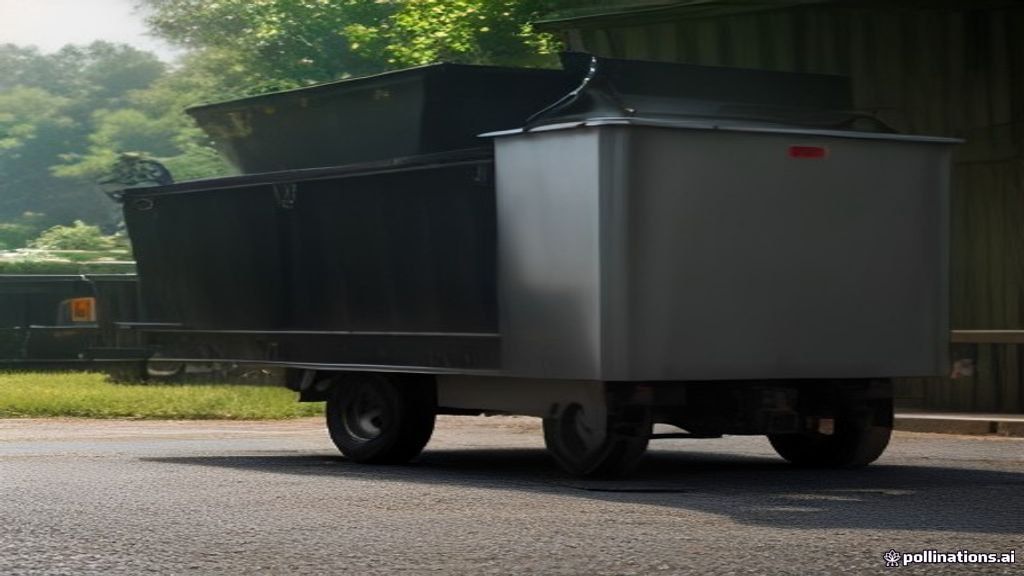
A solo operator running a curbside trash can cleaning business typically earns between $35 and $60 per active route hour, translating to gross monthly earnings of $6,000 to $14,000 ($72,000 to $168,000 per year) once a route matures to 250–400 recurring subscribers. Recurring residential subscriptions average $10 to $15 per bin per visit, while one-off deep cleans range from $25 to $45 per bin. With net operating margins hovering between 65% and 80% after fuel, water, and equipment maintenance, curbside bin sanitization remains one of the fastest-growing, high-margin niche local field services in modern home care.
Detailed Payout Rates & Earnings Breakdown
Generating predictable revenue in the mobile bin washing industry depends on establishing high customer density along existing municipal garbage truck routes. Operators price their services using recurring monthly, bi-weekly, or quarterly subscriptions to lock in predictable cash flow, while offering ad-hoc pricing for one-time deep cleans and commercial dumpsters.
Because the mechanical washing process takes under 3 minutes per bin on an automated trailer rig, labor time per stop is minimal. The table below outlines standard market pricing, execution times, net margin expectations, and revenue potential based on standard suburban service routes in the United States, Canada, the UK, and Australia.
| Service Tier / Contract Type | Average Price to Client | Time Required per Stop | Estimated Gross Profit Margin | Monthly Revenue Potential (100 Clients) |
|---|---|---|---|---|
| Bi-Weekly Subscription (2 Bins) | $20.00 – $30.00 / month | 3 – 5 minutes | 78% – 85% | $2,000 – $3,000 |
| Monthly Subscription (2 Bins) | $12.00 – $18.00 / month | 3 – 5 minutes | 72% – 80% | $1,200 – $1,800 |
| Quarterly Cleaning (2 Bins) | $30.00 – $40.00 / quarter | 5 – 8 minutes | 68% – 75% | $1,000 – $1,330 (Amortized) |
| One-Time Emergency Clean (2 Bins) | $35.00 – $55.00 flat fee | 8 – 12 minutes | 60% – 70% | Variable Ad-Hoc Revenue |
| Commercial Dumpster Pad / Bin Bank | $75.00 – $175.00 / service | 20 – 35 minutes | 80% – 88% | $1,500 – $3,500 (B2B Add-on) |
Commercial contracts with homeowners associations (HOAs), apartment complexes, and restaurant franchises significantly elevate these numbers. Cleaning a row of 20 residential wheelie bins at a multi-family property yields $150 to $250 in under 45 minutes of total runtime, illustrating why business valuation in this sector relies heavily on route density rather than sheer geographical coverage.
Step-by-Step Practical Blueprint
Launching a profitable mobile bin washing service requires transitioning from manual labor to automated efficiency while maintaining strict environmental compliance. Follow this four-step blueprint to build a scalable, high-yielding route from scratch.
Step 1: Select the Right Equipment and Power Configuration
Your equipment setup directly dictates your hourly earning capacity. While entry-level operators start with a pickup truck, a cold-water pressure washer (3,500 PSI at 4 GPM), and a manual blast wand, this entry method caps processing speed at 4–6 bins per hour ($50–$90 gross/hr).
To scale past $10,000 per month, professional operators invest in dedicated trailer systems or flatbed rigs equipped with:
- Hot Water Burners: Heaters capable of bringing water up to 190°F–200°F to sanitize and melt caked-on grease without toxic chemicals.
- Dual Hydraulic Lifters: Automated arms that grab, invert, and wash two wheelie bins simultaneously over a custom collection hopper.
- Multi-Directional High-Pressure Heads: Rotating 360-degree spray heads that scrub bin interiors in 30 seconds.
- Water Reclamation Filters: Multi-stage filtration tanks that catch solids and recycle wash water for graywater retention tanks.
Step 2: Sync Routes with Municipal Trash Pick-up Schedules
Route density is the absolute metric of profitability in local field services. Drive time between stops represents unbillable overhead that destroys profit margins. To maximize efficiency, map your sales efforts to match county or city waste collection schedules.
Target specific neighborhoods on the exact days their trash and recycling bins are emptied. By servicing client bins within 1–3 hours after municipal trucks finish their routes, bins remain on the curb, eliminating the need to walk up private driveways to fetch or return containers. Servicing 12 to 18 stops per hour on a single street yields peak operating earnings.
Step 3: Execute Saturated Neighborhood Marketing
Generalized digital advertising often yields low returns if leads are scattered across a 30-mile radius. Use hyper-local marketing tactics designed to capture entire streets simultaneously:
- Curbside Flyering & Door Hangers: Attach eye-catching flyers to empty trash cans right after municipal collection in your target subdivisions. Include clear introductory bundle pricing (e.g., “Get Your Bins Sanitized Today for $15”).
- Nextdoor & Local HOA Facebook Groups: Offer HOA neighborhood discounts. Propose a “10% discount for the entire street” if 5 or more neighbors sign up for recurring services on the same trash day.
- On-Site Demonstration: Operating a modern washing rig generates natural noise and visual interest. Park your clean, branded truck on a busy residential corner and offer immediate spot cleans to watching neighbors.
Step 4: Automate Subscription Billing and Retention
Never bill clients manually or accept paper checks for low-ticket recurring services. Implement industry-specific field service management software like GorillaDesk, Jobber, or Route4Me paired with Stripe payment processing.
Require clients to store a credit card on file during sign-up with auto-renewal billing terms. Set automated SMS notifications to text clients the night before: “Friendly reminder: Bin Washing Day is tomorrow! Please leave your empty bins at the curb after waste collection.” Automated communication drops client friction and keeps retention rates above 85% year-round.
Hidden Costs, Taxes & Legal Realities
While the gross margins of a mobile cleaning route appear enticing, failing to account for overhead, equipment wear, and regulatory enforcement can cripple cash flow. Keep these operational realities in mind when calculating your net income projection.
- Self-Employment & Business Taxes: As an independent operator or LLC owner, your profits are subject to federal self-employment tax (15.3% for Social Security and Medicare in the US) plus state/provincial income tax. Set aside 25% to 30% of net monthly income into a dedicated business tax account.
- Wastewater Containment & Clean Water Act Compliance: Discharging dirty wash water containing bacteria, food waste, and chemical residue into municipal storm drains violates the Federal Clean Water Act (and equivalent laws in the UK, Canada, and Australia). Fines reach up to $10,000 per day. Rigs must feature integrated wastewater capture tanks, and wash water must be legally discharged at approved municipal graywater dumping stations or reclaimed.
- Fuel and Maintenance Overhead: Running a dual-engine setup (the vehicle engine plus the pressure washer’s gas auxiliary engine and diesel water burner) consumes significant fuel. Budget approximately $15 to $30 per day in burner fuel plus vehicle gas. High-pressure water pumps require oil changes every 50 operating hours and pump seal packings replacement every season.
- Commercial Vehicle and Liability Insurance: Standard personal auto policies explicitly exclude commercial washing operations. You will need a commercial auto policy combined with a $1,000,000/$2,000,000 Commercial General Liability policy to cover accidental property damage (e.g., cracking a client’s aged plastic bin during high-pressure blast cycles). Expect premiums between $150 and $350 per month.
Common Mistakes & Red Flags to Avoid
Avoiding critical operational errors during your first six months protects your brand reputation and prevents early capital exhaustion.
- Chasing Dispersed One-Off Jobs: Driving 15 miles across town to execute a $25 one-time bin wash consumes 45 minutes of travel time and $6 in fuel, yielding a net loss. Institute strict service zones and refuse one-off cleans outside designated trash-pickup schedule days.
- Underpricing Services: Pricing bi-weekly cleans at $5 or $6 per bin to beat competitors forces you to work at unsustainably high speed just to break even. Price based on value, professional deodorization, and eco-friendly compliance, positioning your service as a luxury convenience product.
- Neglecting Hot Water Heating Units: Cold water pushes oil and grease around without removing bacteria, maggot eggs, or persistent odors. Relying on cold water leads to client cancellations due to lingering smells. Always sanitize with water temperatures exceeding 180°F.
- Failing to Inspect Bins Prior to Washing: Always visually check bins before lifting them onto hydraulic arms. Spraying high-pressure water into a bin containing hidden hazardous materials, paint cans, or heavy loose trash will clog your reclamation filters and ruin your pump system.
Frequently Asked Questions
How many trash cans can you realistic clean in a single working day?
With an automated dual-arm trailer rig operating on a dense, pre-planned residential route, a solo operator can clean between 60 and 100 bins per 6-hour shift. Using a manual hand-wand cold-water setup, capacity drops to 20 to 30 bins per day due to manual positioning and longer scrubbing cycles.
What is the realistic initial startup cost for a mobile trash can cleaning business?
Startup costs range widely depending on equipment quality. A DIY entry-level setup utilizing an existing truck, cold-water washer, recovery tank, and manual ramp costs between $3,000 and $7,000. Purchasing a professional, turn-key automated hot-water bin washing trailer or dedicated truck rig costs between $30,000 and $65,000 new.
Do I need a commercial driver’s license (CDL) to operate a bin washing truck?
In most US states, Canada, and Australia, a standard driver’s license is sufficient as long as the Gross Vehicle Weight Rating (GVWR) of the truck and trailer combination remains under 26,000 lbs (11,793 kg). Standard light-duty trucks towing a single-axle or dual-axle washing trailer typically stay well beneath this threshold.
Final Verdict & Practical Advice
A residential trash can cleaning enterprise is a prime example of a recurring local field service with high retention and excellent profit margins. To build a sustainable, recurring cash flow business, keep these core principles at the center of your operations:
- Focus Exclusively on Route Density: Turn down work that doesn’t fit your daily geography. Maximizing the number of bins cleaned per street mile is the single key driver of net hourly earnings.
- Invest in Hot Water Capability Early: Temperature kills germs and dissolves grime far faster than water pressure alone. Prioritize heated water systems over higher pressure ratings to keep client churn below 5%.
- Lock In Card-on-File Recurring Contracts: Treat one-time cleans as secondary lead generators. Structure your business model around automatic monthly credit card billing to build a sellable, enterprise-value recurring service asset.


